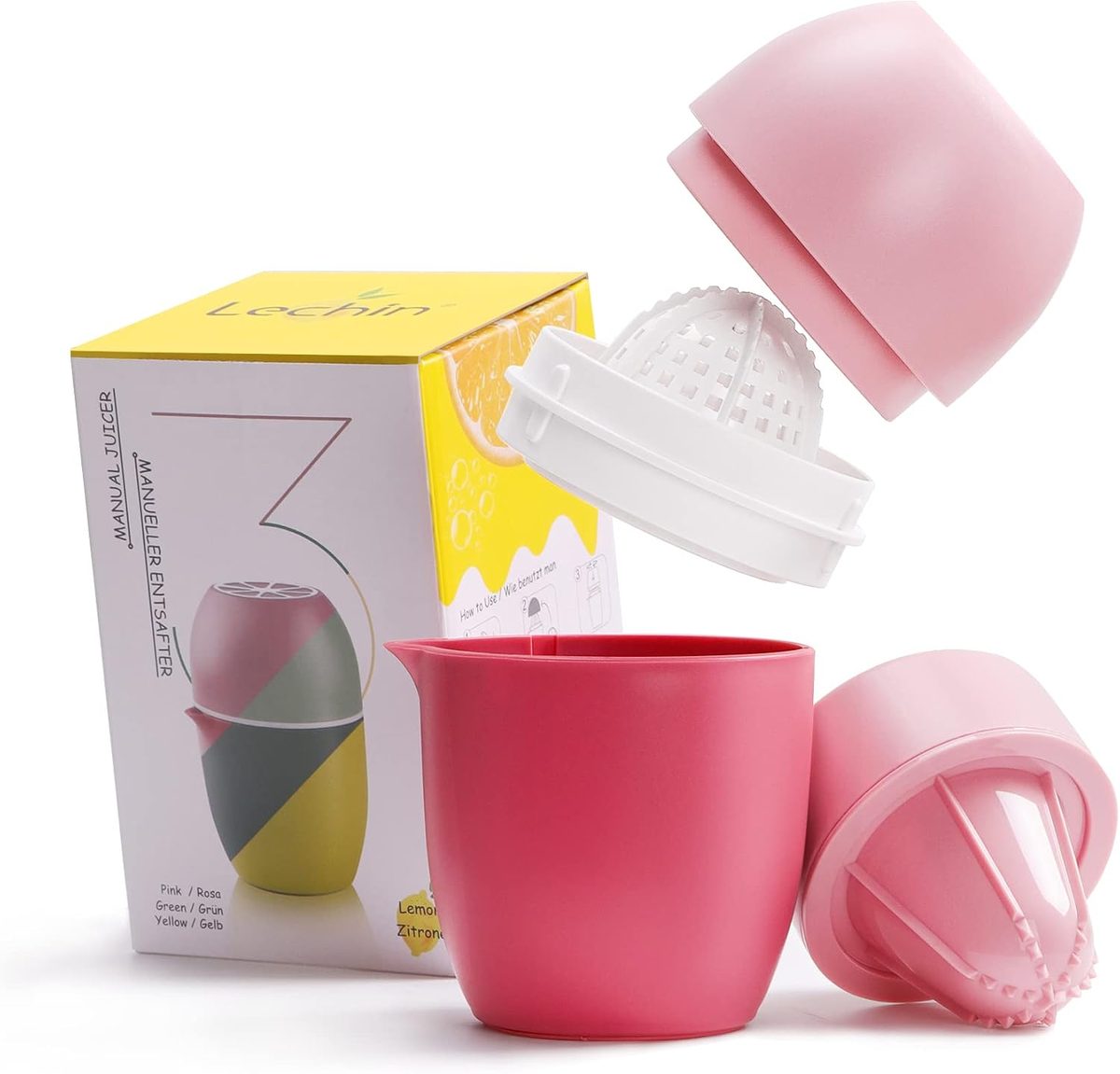
Shop note · The kitchen counter
Picking the right squeeze: a hand juicer guide
A hand juicer is the simplest tool in the kitchen — until a lemon skids off the cone or a cup overflows. These are the tricks we share at the counter for getting the most out of the Lechin juicer.
Which fruit works
| Fruit | Cone | Tip |
|---|---|---|
| Lemons, limes | White | Cut across the middle, not end to end. |
| Small to medium oranges | White | Halves must sit inside the 3.7 in cup opening. |
| Grapes, pomegranate seeds | Pink | Fill the white basket, press with the long pink cone. |
| Watermelon | Pink | Cube it first and press a handful at a time. |
| Apples, carrots | — | Too hard for a hand juicer; use a machine. |
Getting every drop
- Warm it up. Room-temperature citrus gives noticeably more juice than fruit straight from the fridge.
- Roll before you cut. Press the whole lemon on the counter and roll it under your palm to break the pulp inside.
- Let the lid do it. Cap the half with the lemon lid and twist rather than squeeze — the inner thorns hold the fruit steady.
- Pour as you go. The cup holds a few lemons' worth; use the spout to empty it before it reaches the basket.
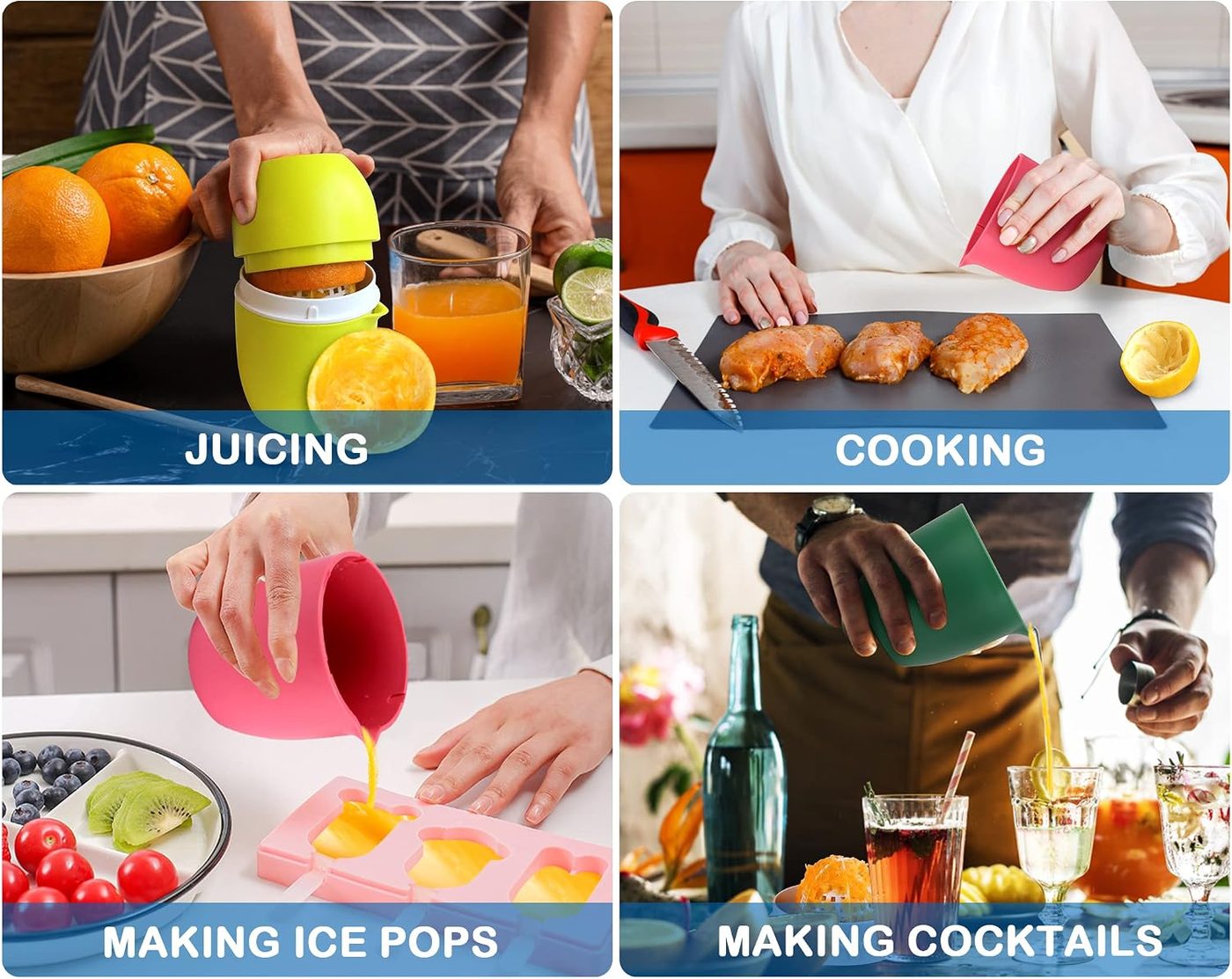
Cleaning the cones
Rinse straight after use, before the pulp dries in the small holes. The whole juicer can go on the top rack of the dishwasher; if you wash by hand, a bottle brush clears the basket in seconds.
One cone at a time. Lift the pink cone off before you set the white cone on the cup — they share the same seat.
Ready to squeeze? Meet the pink Lechin hand juicer.